
Deep cleaning in Maryland is often viewed as a way to make a home healthier, more comfortable, and visually appealing. However, the way cleaning is performed can also affect the environment. Water consumption, chemical use, disposable supplies, energy consumption, and household waste can all increase during intensive cleaning. By adopting more sustainable cleaning practices, households can maintain clean living spaces while reducing their environmental footprint.
A greener approach to deep cleaning focuses not only on removing dirt but also on using resources efficiently and extending the useful life of household materials.
Choosing Reusable Tools over Disposable Supplies
One of the simplest ways to make deep cleaning more environmentally responsible is to reduce reliance on disposable cleaning products. Paper towels, disposable wipes, plastic cleaning pads, and single-use dusters can generate considerable waste when used frequently. Reusable microfiber cloths, washable mop heads, durable brushes, and washable dusters can perform many of the same tasks while being used repeatedly.
Reusable tools should still be maintained properly. Washing cleaning cloths and mop heads after use prevents them from becoming sources of contamination and allows them to remain effective for longer. Households can also designate particular cloths for kitchens, bathrooms, windows, and general surfaces to reduce cross-contamination.
Reducing Water and Cleaning Chemical Consumption
Deep cleaning can involve significant amounts of water, particularly when washing floors, walls, windows, and outdoor areas. Using only the amount of water required for a specific task can reduce unnecessary consumption. A spray bottle, controlled-flow bucket, or appropriately wrung mop can often provide enough moisture without continuously running water.
Cleaning chemicals also require careful consideration. Using excessive detergent or disinfectant does not necessarily produce better results.
In many cases, following the manufacturer’s recommended dilution is sufficient. Concentrated cleaning products can also reduce packaging and transportation requirements because smaller quantities may provide multiple applications.
Environmentally safer cleaning products can be another option, particularly when they have clear ingredient information and appropriate environmental certifications. The goal should not simply be to replace every existing product but to select effective products and use them in appropriate quantities.
Deep Cleaning can Extend the Life of Household Materials
Sustainable cleaning is not limited to reducing what is consumed during the cleaning process. Regular maintenance can also prevent household materials from deteriorating prematurely. Dirt, grease, moisture, mold, and mineral buildup can gradually damage surfaces and furnishings if they are allowed to accumulate.
For example, cleaning carpets and upholstery appropriately can help remove particles and contaminants that contribute to material deterioration. Maintaining tile and grout can prevent buildup from becoming increasingly difficult to remove. Cleaning appliances, fixtures, cabinets, and other surfaces can likewise help preserve their condition.
Extending the lifespan of these items can reduce the frequency of replacement. This matters environmentally because manufacturing, packaging, transporting, and disposing of furniture, flooring, fixtures, and appliances all require resources. Proper maintenance therefore supports a broader principle of sustainability: keeping existing products useful for as long as practical.
Managing Cleaning Waste Responsibly
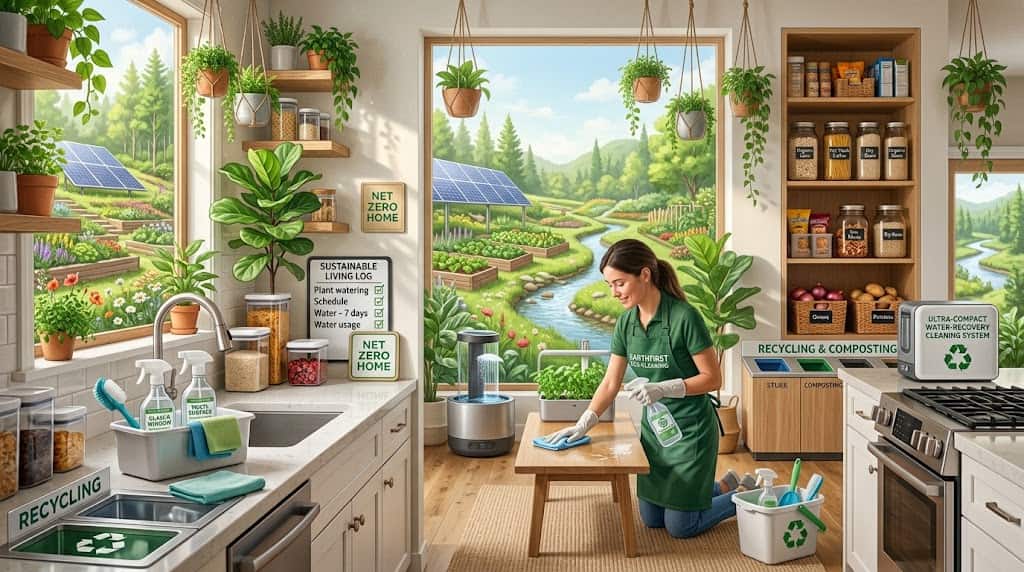
Deep cleaning often uncovers accumulated waste, including expired products, damaged household items, packaging, old electronics, and containers of unused chemicals. Disposing of everything together can create environmental problems, especially when materials require specialized handling.
Households should separate recyclable materials from general waste whenever local recycling programs accept them. Cleaning chemicals, batteries, electronics, and other potentially hazardous materials should be handled according to local disposal requirements rather than poured down drains or placed casually in household trash.
Decluttering during deep cleaning can also encourage more responsible consumption. Items that remain usable may be donated, repaired, or repurposed instead of immediately being discarded. This reduces unnecessary waste while giving household goods a longer useful life.
Making Clean Homes Part of a Sustainable Lifestyle
A greener approach to deep cleaning does not require sacrificing cleanliness or convenience. Instead, it involves making deliberate choices about how resources are used. Reusable tools can replace many disposable supplies, measured cleaning solutions can prevent chemical waste, and water-efficient methods can reduce unnecessary consumption. At the same time, regular maintenance can protect household materials from premature deterioration.
The environmental value of deep cleaning ultimately comes from combining these individual decisions. A clean home does not have to be a resource-intensive home. By treating cleaning as part of responsible household maintenance rather than simply a cosmetic task, homeowners can reduce waste, conserve resources, and make existing possessions last longer. These practices may seem small individually but consistently applying them can make household cleaning a more sustainable part of everyday life.